


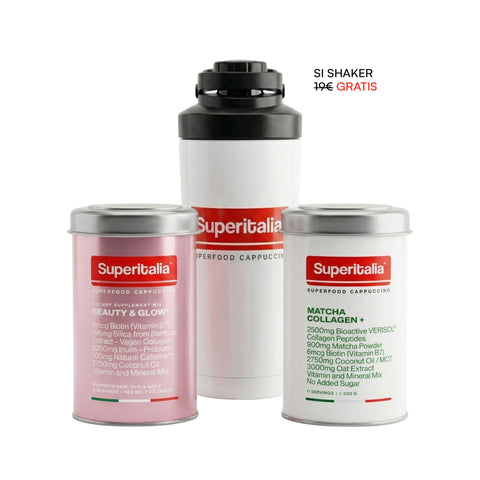
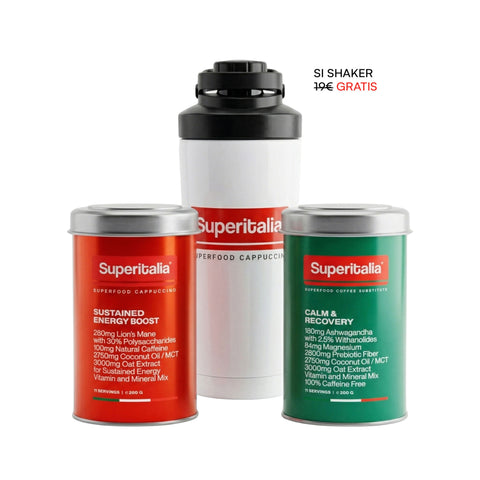

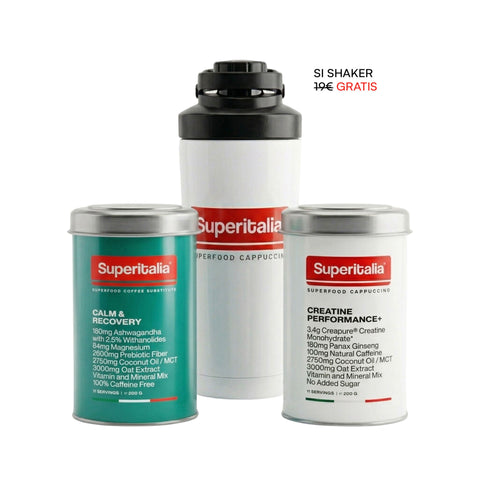


Energie + Regeneration
Sustained Energy Boost & Calm & Recovery – der perfekte Tagesrhythmus für alle die täglich trainieren.

What is a superfood cappuccino and how does it mimic real foam?
At its core, a superfood cappuccino is a functional instant coffee designed to combine the comforting ritual of an Italian classic with targeted nutritional benefits. Instead of relying on dairy or synthetic additives, these superfood cappuccinos combine premium instant coffee with plant proteins, oat extracts, healthy coconut fats, and active botanical extracts. The result is a creamy, nutrient-dense beverage that prepares quickly in hot water while delivering active ingredients directly into your daily routine.
One of the greatest challenges of dairy-free instant beverages is replicating the velvety, microfoam texture of steamed milk. This physical mechanism is solved using advanced food technology. When you hydrate and agitate the mixture, protein isolates derived from blue and white lupin undergo a structural change known as denaturing, which has been shown to offer exceptional foaming properties[1]. As these proteins unfold, their hydrophobic amino acids rotate outward to escape the water, aligning themselves at the boundary where air meets water. This physical rearrangement stabilizes the air-water interface, generating a dense, stable microfoam that closely mimics the behavior of dairy-derived casein micelles, all without lactose, cholesterol, or dairy allergens.
- Denaturing: Lupin proteins unfold during agitation, exposing their internal structure.
- Alignment: Hydrophobic amino acids rotate outward to find air, while hydrophilic parts remain in the liquid.
- Stabilization: The proteins form a protective film around air bubbles, preventing them from merging.
- Result: A durable, creamy microfoam that emulates traditional milk foam.
While this plant-based protein technology offers a clean, allergen-free alternative to dairy, it is important to note a key safety caveat regarding botanical allergens. Lupin belongs to the legume family, meaning individuals with known peanut allergies should exercise caution due to a documented risk of cross-reactivity between lupin and peanut proteins. If you have a legume allergy, always consult your physician before adding lupin-containing functional beverages to your diet.
The metabolic and energy pathways of oats and medium-chain fats
When you drink a functional beverage, how your body processes the energy is just as important as the initial stimulation. Oat beta-glucan plays a primary role in stabilizing this uptake. Upon consumption, this soluble fiber hydrates to form a highly viscous gel within the digestive tract, which slows gastric emptying and flattens the subsequent glucose curve. A meta-analysis by Zurbau et al. (2021) demonstrated that oat beta-glucan intake can lead to a 23% reduction in postprandial glucose incremental area under the curve (iAUC)[2]. However, it is vital to understand that the median dose in this clinical meta-analysis was 4.2 grams[2] of pure beta-glucan. While a serving of Superitalia contains three thousand milligrams of whole oat extract, this is not equivalent to three grams of pure beta-glucan, and no claims regarding cholesterol reduction are made for this product.
Alongside slow-releasing carbohydrates, functional fats provide an alternative fuel source. Medium-chain triglycerides (MCTs) derived from coconut oil bypass the standard fat digestion process. Instead of requiring pancreatic enzymes and bile salts for emulsification in the small intestine, MCTs are absorbed directly via the portal vein and transported straight to the liver. This rapid uptake allows them to serve as a direct, non-carbohydrate energy substrate. By integrating both oats and coconut fats, a blend like Sustained Energy Boost provides a dual-source metabolic fuel pathway that balances immediate utility with long-term stability.
| Ingredient | Absorption Method | Primary Function |
|---|---|---|
| Oat Beta-Glucan | Forms a viscous gel in the digestive tract | Slows gastric emptying to flatten the glucose curve |
| Coconut MCTs | Absorbed directly via the portal vein | Bypasses bile salts to provide a rapid energy substrate |
Evaluating the evidence for Lion's Mane and Ashwagandha
To understand if functional coffees deliver on their promises, we must separate marketing hype from clinical reality. Plant and mushroom extracts are often presented as miracle cures, but their actual pathways are highly specific. Looking closely at Lion's Mane mushroom, often featured in focus-oriented blends like Sustained Energy Boost, reveals a nuanced picture. Many brands claim that isolated hericenones are the secret to brain performance. However, a study by Mori and colleagues demonstrated that while whole extracts of Hericium erinaceus showed activity, isolated hericenones C, D, and E did not promote nerve growth factor gene expression in human [3]astrocytoma cells. For this reason, the active constituents responsible for any potential neurotrophic effect remain unestablished.
Similarly, the assessment of Ashwagandha root extract depends critically on the dose studied. In a double-blind, randomized, placebo-controlled study by Salve and colleagues, healthy adults experiencing stress were given different doses of a high-concentration aqueous root extract. The researchers observed that a dose of 250 mg per day significantly improved Perceived Stress Scale scores and sleep quality over eight weeks. For comparison, a single serving of Calm & Recovery provides 180 mg of ashwagandha root extract, meaning the study's positive outcome was based on a higher dose than a single cup provides.
| Ingredient | Clinical Finding | Studied Daily Dose | Practical Application |
|---|---|---|---|
| Lion's Mane | Isolated hericenones C, D, and E did not stimulate nerve growth factor gene expression in human astrocytoma cells. | In vitro whole-extract models | The constituent responsible for any potential neurotrophic effect has not been identified. |
| Ashwagandha | Significantly improved perceived stress scores and sleep quality in healthy adults. | 250 mg per day | A serving of Calm & Recovery contains 180 mg, below the dose studied. |
Frequently asked questions
How does a dairy-free cappuccino foam so well?
It relies on protein isolates from blue and white lupin. When agitated, these proteins denature, and their hydrophobic amino acids rotate outward to stabilize the air-water interface. This creates a dense microfoam that structurally mimics dairy milk's casein micelles, entirely without lactose or cholesterol.
Does oat extract lower cholesterol in functional coffees?
No. While clinical trials show that median doses of 4.2 grams of oat beta-glucan can reduce postprandial glucose responses by 23%, functional coffees typically use around three thousand milligrams of whole oat extract. This does not contain enough isolated beta-glucan to support an authorized cholesterol-lowering claim.
Do MCTs in coconut oil provide energy like carbohydrates?
No, they provide energy through a different metabolic pathway. Medium-chain triglycerides (MCTs) are absorbed directly via the portal vein to the liver without requiring bile salts. This provides a rapid energy substrate that acts quickly, distinct from the glucose spikes associated with simple carbohydrates.
Does Lion's Mane directly stimulate nerve growth factor?
The clinical evidence here is often misread. A study on human astrocytoma cells found that hericenones C, D, and E from Lion's Mane did not independently promote NGF gene expression. The compound responsible for the activity seen in whole extracts therefore remains unidentified, and no cognitive effect is established in humans.
What is an effective dose for Ashwagandha root extract?
In a randomized, placebo-controlled study by Salve (2019), a daily dose of 250 mg of Ashwagandha root extract significantly improved perceived stress scale (PSS) scores and sleep quality over eight weeks. Functional blends often contain smaller amounts: Calm & Recovery provides around 180 mg per serving, below the dose studied in that trial.